

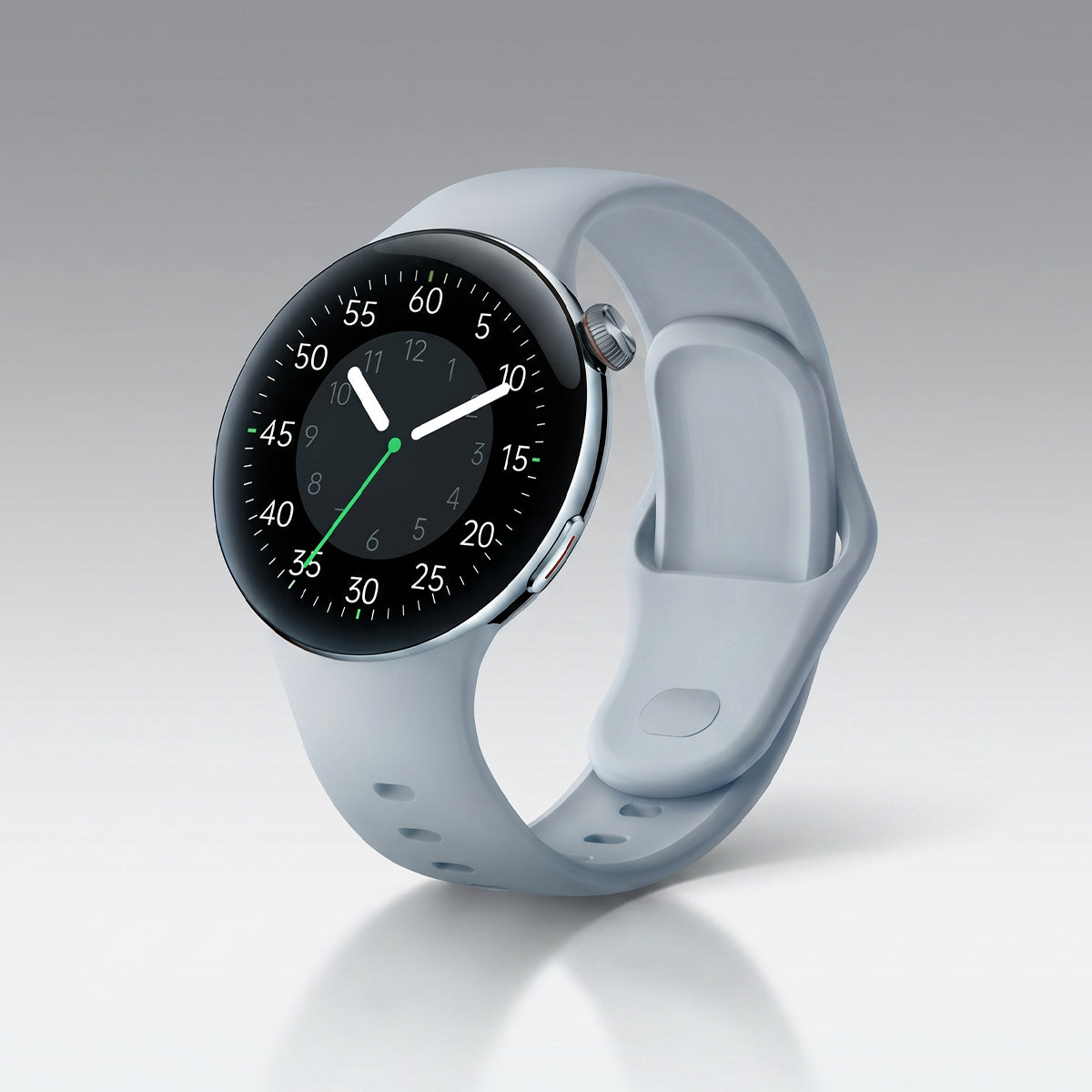


Short answer: Yes — a smartwatch can detect atrial fibrillation (AFib), and the technology is genuinely good at it. But “good” doesn’t mean perfect, and it definitely doesn’t mean it replaces a doctor. A major 2025 meta-analysis of 26 studies concluded that smartwatches “possess excellent diagnostic accuracy” for AFib detection. But the same research also shows a meaningful miss rate, false alarms, and limitations that every user should understand before trusting a notification.
Here’s the honest breakdown.
What Is Atrial Fibrillation and Why Does It Matter
AFib is the most common heart rhythm disorder, affecting over 52 million people worldwide — a 137% increase since 1990. It happens when the upper chambers of your heart (the atria) stop beating in sync and start quivering instead. Blood pools, clots can form, and those clots can travel to your brain.
That’s why AFib is a leading cause of stroke.
The cruel part? AFib is often silent. Many people have no symptoms at all. Others feel a flutter, fatigue, or breathlessness and dismiss it. The first sign for some is a stroke.
Early detection matters because anticoagulation therapy can prevent AFib-related strokes when started in time. But conventional ECG monitoring is intermittent — a 24-hour Holter monitor only catches AFib in about 2–6% of patients during that window. AFib that comes and goes (paroxysmal AFib) is easy to miss.
That’s the gap smartwatches are trying to fill.
How a Single-Lead ECG Works in Your Watch
A hospital 12-lead ECG uses ten electrodes to capture your heart’s electrical activity from twelve different angles. It’s a full 3D map.
Your watch uses one lead — essentially lead I. Here’s how it works:
-
The back of the watch touches your wrist (one electrode).
-
You place a finger from your other hand on the digital crown or side button (the second electrode).
-
The circuit completes through your body, and the watch records the electrical signal for about 30 seconds.
You get a single waveform — a snapshot from one angle. The watch’s algorithm analyses that waveform for the hallmark of AFib: irregularly irregular R-R intervals (the spacing between heartbeats varies unpredictably) and the absence of consistent P-waves (the small bump before each beat that signals the atria contracting properly).
When you’re not actively recording an ECG, the watch uses PPG (the green light sensor) to passively monitor your pulse rhythm. If it detects irregularity, it nudges you to take an ECG reading.
PPG alone can flag possible AFib. ECG confirms the rhythm. Together, they form the screening pipeline.
The Research: Sensitivity and Limitations
The headline numbers are impressive.
A 2025 systematic review and meta-analysis published in JACC: Advances pooled 26 studies with over 17,000 patients. Overall sensitivity was 95% and specificity was 97%, with an area under the curve of 0.97. Apple Watch specifically achieved 94% sensitivity and 97% specificity. Samsung devices hit 97% sensitivity and 96% specificity.
Another validation study using a device combining PPG and ECG reported sensitivity ≥95%, specificity ≥98%, and a 99% correlation with AF burden measured by 24-hour Holter monitoring.
And a randomized controlled trial in older adults at elevated stroke risk found that 6-month smartwatch screening detected new-onset AFib in 9.6% of participants, compared with 2.3% in the standard care group — a hazard ratio of 4.40.
That’s real. Smartwatch screening finds AFib that routine care misses.
But here’s where it gets complicated.
Why Your Watch Might Miss an Episode
A 2025 multicenter study published in Europe PMC tested Apple Watch and a smart ring against simultaneous 12-lead ECG in 483 patients. The results were sobering.
In the “worst-case” analysis — counting every recording, including unclassified ones — Apple Watch sensitivity dropped to 69.1% and specificity to 72.6% .
Apple Watch missed approximately 1 in 3 episodes of AFib.
Why?
1. Short recording windows. A 30-second ECG is a tiny slice of time. AFib is often paroxysmal — it comes and goes. You might record during a normal rhythm and miss the episode entirely.
2. Motion artifacts. Movement corrupts both PPG and ECG signals. False positives are predominantly attributable to motion artifact interference and suboptimal signal quality. During exercise or even fidgeting, the signal degrades.
3. Unclassified readings. Apple Watch classified 20.1% of recordings as “unclassified” — too noisy or ambiguous for the algorithm to call. Those aren’t false positives; they’re non-answers.
4. Algorithm limitations. The device’s automated detection algorithm is the bottleneck, not the sensor itself. A device-agnostic algorithm outperformed manufacturer algorithms in one study, suggesting room for improvement.
5. False positives from ectopic beats. Premature atrial contractions (PACs) can mimic AFib’s irregularity. Single-lead ECG required 3.4 times fewer extrasystoles than a six-lead device to produce a false positive.
The Apple Heart Study — the landmark 2019 trial that put smartwatch AFib detection on the map — reported a positive predictive value of 84% for irregular pulse notifications confirmed by ECG patch. That means 16% of alerts weren’t AFib. In a low-risk population, false positives climbed even higher, with one analysis citing specificity as low as 46% and PPV of 7.6% .
In other words: in a general population with low AFib prevalence, most alerts might be false alarms. In a high-risk population, the same alerts are more likely to be real.
What to Do If You Get an Irregular Rhythm Notification
Don’t panic. Don’t ignore it either.
Here’s the practical sequence:
1. Check how you felt. Were you moving? Stressed? Caffeinated? If the alert came during activity, it’s more likely a false positive.
2. Take an ECG reading — properly. Sit still. Rest your arm on a table. Place your finger firmly on the crown. Don’t move for the full 30 seconds.
3. Save the PDF. Most apps let you export the ECG strip. That’s valuable data for your doctor.
4. Book an appointment. Show your doctor the ECG. A 12-lead ECG or a longer monitoring period (Holter, patch, or implantable loop recorder) can confirm or rule out AFib.
5. Don’t change medication on your own. Ever. Anticoagulation decisions require a physician who knows your full risk profile.
One alert means “get checked.” Repeated alerts over days or weeks mean “get checked sooner.” A single alert in a low-risk person is often a false alarm — but it’s still worth a conversation.
The Future: From Single-Lead to Multimodal Detection
The next generation of AFib detection is already in development, and it’s focused on three things: more leads, better fusion, and smarter algorithms.
Multimodal fusion. Combining PPG and ECG signals improves accuracy over either alone. One study showed PPG-only detection at 87.8% sensitivity and 97.4% specificity, jumping to 96.9% sensitivity and 99.3% specificity when ECG data were incorporated.
Six-lead wearables. Devices that capture multiple vectors provide more reliable QTc estimation and better differentiation of arrhythmias. Single-lead ECG’s “lead I only” view limits its ability to distinguish AFib from other rhythm disorders.
Deep learning on combined signals. Research presented at ACC 2026 showed a deep learning model trained on ECG that was then applied to wearable PPG data, achieving 96.7% accuracy and 95.8% specificity in external validation. The idea: use validated ECG labels to train better PPG algorithms, enabling scalable passive detection.
Physician overread. One of the most practical improvements is simply having a cardiologist review the ECG strip. Physician interpretation significantly improved AFib diagnosis compared to the automated algorithm alone. The bottleneck isn’t the sensor — it’s the interpretation layer.
The Bottom Line
Smartwatches can detect AFib — and in the right population, they find cases that standard care misses. The technology is real, the research is solid, and the clinical benefit is measurable.
But they are screening tools, not diagnostic devices. They miss episodes. They generate false alarms. They can’t distinguish AFib from every other irregular rhythm. And they don’t replace a 12-lead ECG, a Holter monitor, or a cardiologist.
Use your watch to notice. Use a doctor to decide.
If you get an alert, take it seriously — but don’t let it ruin your week. Export the ECG, book an appointment, and let a professional interpret what your wrist already flagged.
That’s the balance. Not blind trust. Not dismissal. Just informed attention. 😉



Tinggalkan komentar
Situs ini dilindungi oleh hCaptcha dan berlaku Kebijakan Privasi serta Ketentuan Layanan hCaptcha.